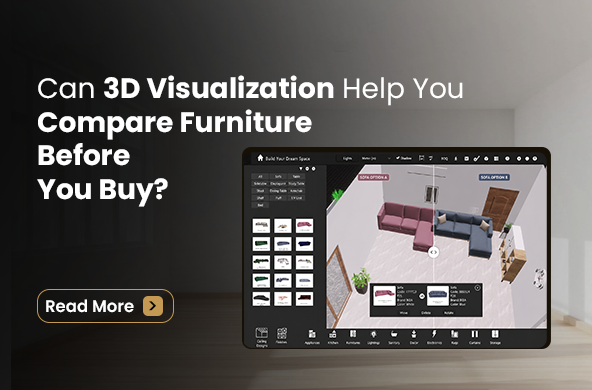
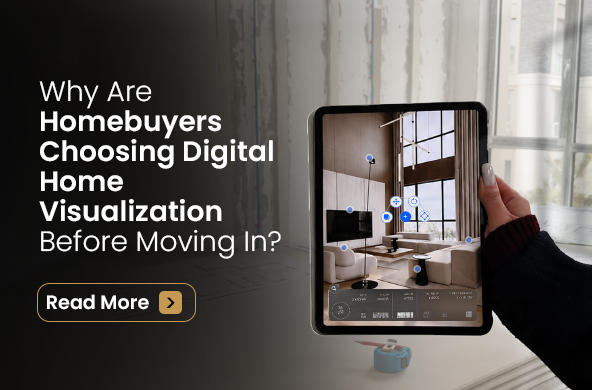
The visualization of interiors has evolved over recent years, especially with the growing use of Interior Visualization. What has been a case of 3D images and images that are not interactive is turning out to be more interactive and realistic. Technologies are advanced nowadays, and designers, architects, and real estate developers can demonstrate how a space will be and how it will feel even before they start their construction. Smart software, three-dimensional virtual worlds, and a number of other innovations are changing the future of interior imaging and the way spaces are conceived and delivered.
Real-Time Rendering: What Is Its Role in a Contemporary Interior Visualization?
Real-time rendering is emerging as one of the most potent ways of visualizing interiors. Such innovations assist clients in knowing designs, making quick decisions, and also saving money that is spent on making expensive modifications in the future through advanced 3D Visualisation.
- Instant design updates
- Interactive walkthroughs
- Lighting adjustments
- Material switching
- Faster client approvals
- Live scene editing
Artificial Intelligence and Automation in Visualizations
Artificial intelligence has assisted the designers in coming up with more visuals at a faster rate and with great accuracy and realism. AI-based tools are able to scan layouts, offer suggestions on making designs better, and even automate such tasks that used to be done by hand.
- AI is able to create realistic textures, lighting, and placement of furniture automatically, depending on the design context.
- Intelligent algorithms forecast layouts of space and suggest modifications of the design that enhance functionality and beauty.
- Automation software saves time in manual modeling and offers a high level of accuracy in interior visualization projects.
- Machine learning can enhance the quality of rendering with thousands of real-life cases of interior lighting.
What Are Virtual Reality and Augmented Reality Doing to Interior Design Presentation?
VR and AR are revolutionizing the experience of the interior spaces of the clients. The clients will not have to look at flat images but step into a design and explore it in the way it already exists with the help of a virtual room designer.
- Immersive design tours
- Exploration in the interactive room
- Real-scale experience
- Increased design knowledge
- Faster decision-making
- Reduced design revisions
The Increasing Significance of Cloud-Based Visualization Systems
Designers no longer need to incorporate cumbersome design files on local systems to be able to work through cloud platforms capable of enabling teams to collaborate in real time. The cloud platforms also enhance the efficiency of workflow since rendering can be handled with powerful remote servers as opposed to the use of local hardware only.
Conclusion
With the industry still changing, state-of-the-art visualization software will be instrumental in aiding designers to convey their ideas and shape the future of Interior Visualization. Companies interested in remaining ahead of this fast-changing field can consider the further visualization capabilities of such solutions as the Xperience NXT.