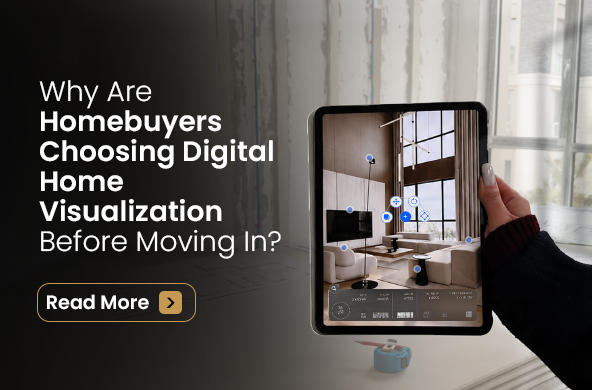
The concept of interior design used to be regarded as a service offered to either professionals or individuals with vast amounts of money, particularly in the field of Interior Designing. The old design methods involved numerous meetings, hard copies, and extended time scales, and this posed a challenge to several individuals to obtain professional design assistance. With the ever-evolving technology, interior design has been made more convenient, and under the guidance of technology, more people can contribute to the creative process and make informed decisions as to the design.
How can digital design tools make interior design simpler?
The current design software and mobile applications are assisting users to see what they want without undergoing any professional training. They make the designing process rather easy and enable individuals to try various styles and layouts before changing anything in real life using a 3D room planner.
- Easy room planning
- Drag-and-drop layouts
- Instant design previews
- Simple material selection
- Beginner-friendly tools
- Quick layout changes
Artificial Intelligence-Based Tools Creating Design Opportunities
Artificial intelligence is proving significant in the area of interior design, being more accessible to more people. The platforms that are supported by AI can review the dimensions of rooms, preferences, and trends in design and offer appropriate recommendations. This assists the users in making improved design decisions despite the fact that they may not be well-experienced in interior planning, demonstrating the role of Technology in designing.
- The AI-based solutions study the size of rooms and recommend the layout of the furniture that enhances the efficiency of the space planning.
- The design generators are automated and generate a variety of layouts depending on the preferences and style choices of the user.
- Smart systems suggest materials, colors, and lighting options that are fitting in various interior settings.
- Visualized AI-enabled tools guide amateurs in the knowledge of the design results prior to purchasing decisions.
How do virtual and augmented reality increase design accessibility?
The interior design is becoming more understandable and engaging with the help of the so-called immersive technologies, such as virtual reality (VR) and augmented reality (AR). Users can now realistically utilize designs as opposed to using drawings or simple pictures through tools like 3D room design.
- Virtual room walkthroughs
- Real-scale previews
- Unfixed interactive furniture
- Better design clarity
- Faster decision-making
- Reduced design confusion
Online Solutions to Design Collaboration at a Distance
Cloud platforms enable designs to be shared, edited, and reviewed by eliminating physical meetings and huge files that were kept on personal computers. This simplifies homeowners, businesses, and design professionals working together, irrespective of location. Cloud systems are also helpful in faster updates and improved communication in projects. Consequently, geography and the costly infrastructure no longer restrict interior design.
Conclusion
The new technologies, such as digital design tools, artificial intelligence, VR and AR experiences, and cloud-based collaborative systems, are enabling individuals to be bolder in exploring design concepts within Interior Designing. Modern visualization solutions, such as Xperience NXT, that allow businesses and designers to seize the opportunities that such improvements can bring, can be examined by those who wish to make the process of interior design more engaging and approachable to all users.