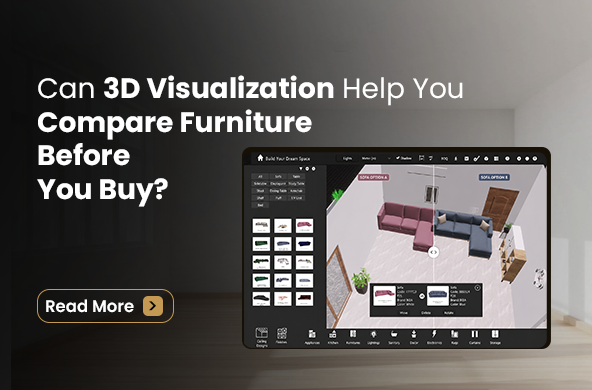
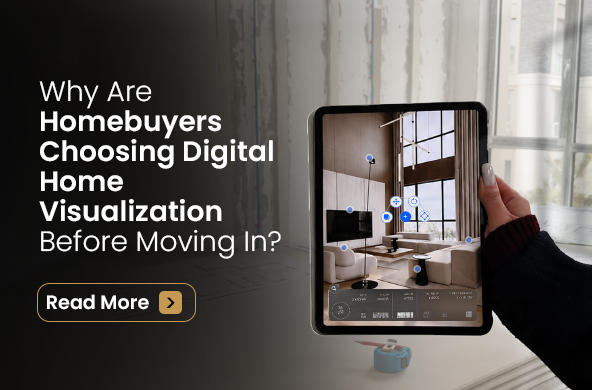
Space planning has been a process that is always about imagination—customers attempting to envision layouts based on drawings and designers clarifying thoughts based on a still image. Nevertheless, it can be very confusing, resulting in misaligned expectations and expensive revisions. Nowadays, virtual reality (VR) is transforming that experience with VR interior design. People can now visualize a space and enter it before its reality, and design has never been more interactive, precise, and confidence-based than it is today.
What were the problems that the conventional design processes generated?
Before VR, space design was completely dependent on drawings and assumptions, which in most cases created gaps in comprehension.
- Limited spatial clarity
- Client miscommunication
- Delayed approvals
- Rework cycles
- Visualization gaps
What is the benefit of virtual reality to the accuracy of space design?
Virtual reality helps designers and clients to feel the spaces in reality size and make a decision more quickly and more valid.
- Allows life-size walkthroughs, which will assist clients with getting an idea of the space prior to construction.
- Eliminates the expensive design mistakes through early detection of layout and spacing problems.
- Enhances trust of the clients as they can see materials, lighting, and finishes in detail.
- Improves the speed of approvals because the stakeholders are able to view and complete changes on designs immediately.
World of Imagination to World of Real-Time
Virtual reality transforms design into an experience-oriented process instead of one that is conceptual. Users do not have to use drawings but can walk around rooms, learn about proportions, and engage with design aspects in real time. This enhances clarity as well as establishes emotional attachment with space.
Designers get to experiment with various layouts, lighting scenarios, and materials in real-time, enabling the creation of functional and aesthetically appropriate spaces, as per the expectations of their clients using VR in Design Spaces.
Why are designers quickly moving towards virtual reality?
VR tools are becoming more valuable in simplifying the process of designing as well as enhancing the overall results as the project becomes more complex.
- Faster decision-making
- Better design validation
- Enhanced client engagement
- Reduced project risks
- Improved collaboration
Conclusion
VR is not only enhancing the creative process, but it is also changing the way spaces are visualized, designed, and lived in. VR eliminates guesswork and allows real-time interaction to provide accurate, efficient, and client vision-aligned designs through 3D visualization with VR. Solutions such as Xperience NXT are a way to embrace this new type of designing with immersive VR, so you can create a space that people can experience before it is even built.