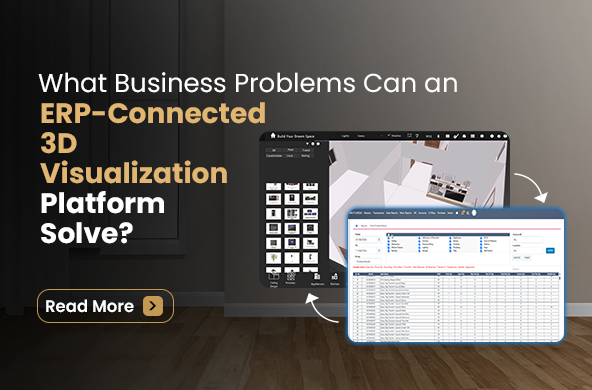
3D product configurators let customers choose various sizes, material, color, features and configurations to make their product. The experience is only as reliable, however, as the information about the products on which it’s based. ERP data with a 3D configurator links product visualization so customers can make better correct choices.
How can ERP data ensure product information is accurate?
Product data along with various components, price, inventory and specifications are stored on ERP systems. This can help to sync up this information with a configurator and decrease the need to have it stored in various systems through ERP integration.
- Centralized product information
- Updated product specifications
- Consistent configuration data
- Lowered manual data typing
Does ERP Integration Help to Build Accurate Configurations?
A reliable and accurate set of rules is required for a configurator to decide on the combinations available and compatible. Product component and variations details in ERP can be used to feed the data to the 3D product configurator, which can then show the right combinations according to the actual business needs.
- Validate component combinations
- Configure products
- Reflect available options
- Reduce configuration errors
Why is it important to have real-time product data?
Users are looking to see what a company can offer the product and options in a virtual configuration. When the information is outdated, customers may be tempted to choose materials that are out of stock, or incorrect specifications or pricing, which is not applicable anymore.
Key product information can be synced from the business systems to ERP, then to the configurator. This means it will give a more uniform experience, and minimize the variation between what customers set up online and what the business is able to produce, cost and offer through 3D visualization.
What Data can be integrated with a 3D Configurator from ERP?
The use of various ERP data types can help a 3D product configurator’s functions. Depending on the product and the product configuration process of the business, specific data may be needed.
The dimensions and specifications of the product. The size and characteristics of the product.
- Describe the materials and components.
- Data on prices and inventory levels. Information about prices and stock.
- The rules of manufacturing and configuration are:
How ERP Data can enhance Customer Experiences?
All the back-end data may make it more reliable for customers to configure it. Having all product information, pricing and specification integrated with business data and information equips the user to make more informed decisions.
For example, in a drop-down menu, display the appropriate product options.
- Provide accurate pricing
- Reduce selection confusion
- Provide information and support to help with informed purchasing decisions
Conclusion
ERP data integration can help eliminate the inconsistencies and the smoother transition from product customization to business operations. Xperience NXT can assist businesses in discovering digital visualization solutions to bridge the gap between engaging 3D product experiences and accurate product configurator information and changing business needs.